

Our Mission is to Unlock the Potential of Space.
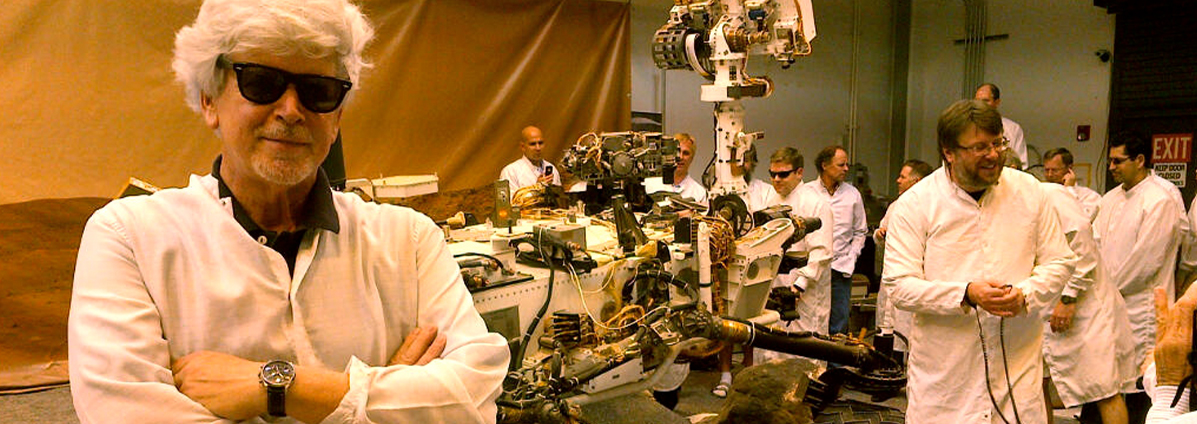
Since 1983, Honeybee Robotics has been creating advanced robotics for the most challenging environments in our solar system. Our visionary co-founders, Chris Chapman and Steve Gorevan, knew space was the place to be and secured their first NASA contract in 1986. It wasn’t until 2003 that Honeybee Robotics sent its first robotic system, the Rock Abrasion Tool, into space on the incredibly successful Mars Exploration Rovers, Spirit and Opportunity.
In between those years, Honeybee pushed the envelope to develop state-of-the-art robotic arms, robot end-effectors, and smart task-oriented electromechanical systems for companies including IBM, 3M, Con Edison, and Nabisco. From humble beginnings above a piano repair shop in the Lower East Side of New York City to three facilities across the nation, Honeybee’s origin story is one of grit, resilience, and a pursuit of passion for innovation.
In 2022, Honeybee Robotics became a wholly owned subsidiary of Blue Origin. To date, we have designed hardware for every planet between Mercury and Saturn and completed hundreds of projects for NASA, defense, and commercial customers. Our expertise in Unlocking the Potential of Space is captured in our two business units: Motion Control and Exploration Systems.
The Honeybee Timeline:
1983 – Honeybee Robotics is established by Chris Chapman and Steve Gorevan in Manhattan, New York.
1993 – Honeybee Robotics begins the development of extraterrestrial drills for the purpose of exploring the Moon and Mars.
2003 – Honeybee Robotics contributes to our first spaceflight project, NASA’s Mars Rovers Spirit and Opportunity, creating the first manufactured tool to grind rock in space.
2008 – Honeybee Robotics contributes to NASA’s Phoenix Mars Lander: The First Spacecraft to touch ice on another planet.
2013 -Honeybee Robotics secures first flight contracts to supply Earth-orbiting satellite pointing system components marking a major inflection point for the Motion Control business.
2018 – Honeybee Robotics merges with motor company Avior Controls to become a vertically integrated robotic solutions provider.
2019 – Honeybee Robotics begins developing drills, vacuum seal containers, and drive tubes for astronauts.
2022 – Honeybee Robotics is acquired by Blue Origin and becomes a wholly owned subsidiary. The combined capabilities of Honeybee and Blue Origin creates new opportunities, efficiencies, and innovations.